








Working from home is now a common reality for many people. Having a dedicated area that is both cosy and productive can make a big difference to your workday. A home office that feels comfortable yet encourages focus helps improve motivation and reduce distractions. Here are some simple tips to create a home office space that balances comfort with productivity.
Choose the Right Location
The first step is deciding where to set up your home office. Ideally, select a quiet corner or a room with minimal foot traffic and noise. Natural light is a big plus as it lifts your mood and reduces eye strain. If possible, set your desk near a window, but avoid glare on your screen by positioning it sideways.
If space is limited, try to define the work area clearly, even if it’s just a small desk in a shared room. Using a room divider or arranging furniture to create a distinct workspace can help mentally separate work from leisure.
Pick a Comfortable and Supportive Chair
Your chair is one of the most important investments. Spending hours seated means you need good back support and comfort to avoid aches. Look for chairs with adjustable height, lumbar support, and cushioning. Even simple measures like adding a lumbar roll or padded seat cover can improve comfort.
Remember to maintain good posture. Sit with your back straight, feet flat on the floor, and elbows at a 90-degree angle to your desk.
Organise Your Desk for Efficiency
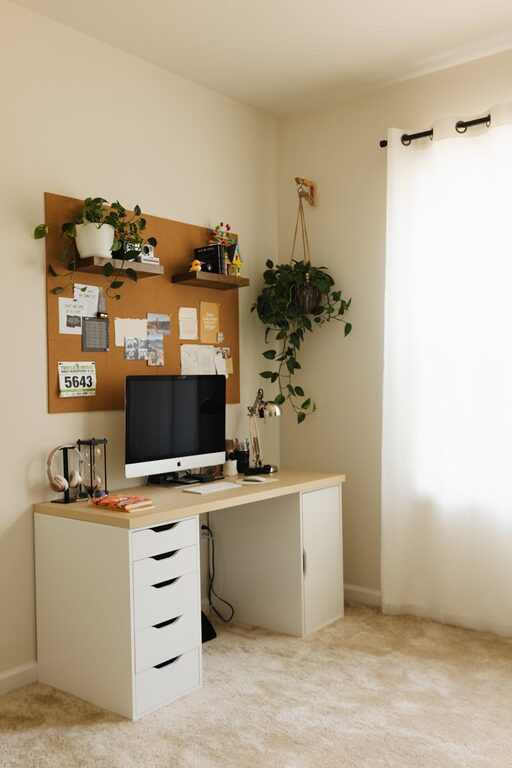
A tidy desk equals a tidy mind. Keep only the essentials on your desktop to avoid clutter, such as your computer, notepad, and favourite pen. Use cable organisers to manage wires and prevent a messy look.
Consider storage solutions like trays, file holders, or small drawers to keep documents, stationery, and gadgets organised but within reach. Being able to find what you need quickly reduces distractions and wasted time.
Personalise Your Space to Feel Inviting
Adding personal touches makes your office feel more welcoming. Items such as photos, artwork, or small plants can brighten the atmosphere and make you feel more connected to the space.
Greenery not only adds colour but also improves air quality and creates a calming effect. Choose low-maintenance indoor plants such as succulents, spider plants, or snake plants that thrive with minimal care.
Use Appropriate Lighting
Good lighting is essential to reduce eye strain and create a pleasant workspace. Combine natural light with a desk lamp that offers adjustable brightness. Warm white bulbs tend to create a cosy environment, whereas cool white bulbs are usually better for focus and alertness.
Avoid harsh overhead lights and position your screen to reduce glare. Using curtains or blinds can help control sunlight levels throughout the day.
Establish a Dedicated Work Routine and Boundaries
A productive home office is not just about the physical space but also the mental approach. Set clear working hours and communicate your schedule to those you live with to minimise interruptions.
Start each day by organising your tasks and priorities. Incorporate regular breaks to stretch and refresh your mind. Using techniques like the Pomodoro method – working in focused intervals followed by short breaks – can help maintain productivity.
Keep Technology Up to Date and Functional
Reliable technology supports efficient working. Ensure your computer, internet connection, and peripherals like keyboard and mouse are in good working order.
Additional tools such as a second monitor, noise-cancelling headphones, or an ergonomic keyboard can enhance comfort and productivity. Keep software updated and back up important files regularly.
Maintain Good Air Quality and Temperature
A comfortable temperature and fresh air are vital for concentration. Keep the room well ventilated by opening windows when possible or using an air purifier. Adjust heating or cooling to suit your preferences, aiming for a temperature around 20–22°C.
Comfortable temperature settings help avoid distractions and keep energy levels steady during long work sessions.
Incorporate Movement into Your Day
Sitting for long periods can be harmful, so try to incorporate movement into your daily routine. Use a standing desk option if possible, or take brief breaks to stretch and walk around.
Setting reminders to stand up every hour or doing simple exercises helps reduce fatigue and increases circulation.
Final Thoughts
Creating a cosy and productive home office does not need to be complicated or expensive. By focusing on the essentials such as location, comfort, organisation, lighting, and personalisation, you can craft a workspace that supports your well-being and efficiency.
Remember that your home office should work for you. Feel free to adjust and evolve it over time to meet your changing needs and preferences. With these simple tips, you’ll be well on your way to enjoying a comfortable, inviting environment that makes working from home a pleasure.