









Creating a home workspace that is both relaxing and productive can make a significant difference in how well you work and how you feel during the day. Whether you’re new to working from home or looking to improve your current setup, this guide offers practical advice to help you establish a space that nurtures focus, creativity, and calm.
Why a Good Home Workspace Matters
Working from home can be challenging without the right environment. A well-designed workspace can reduce distractions, enhance concentration, and promote a healthier work-life balance. It’s not just about having a desk and a computer — it’s about creating an atmosphere that supports your goals and wellbeing.
Choosing the Right Location
Find a Dedicated Space
Having a dedicated area for work helps your mind separate professional tasks from personal time. This can be a spare room, a corner in the living room, or even a section of your bedroom. Choose somewhere that limits interruptions and is comfortable for long periods.
Consider Natural Light
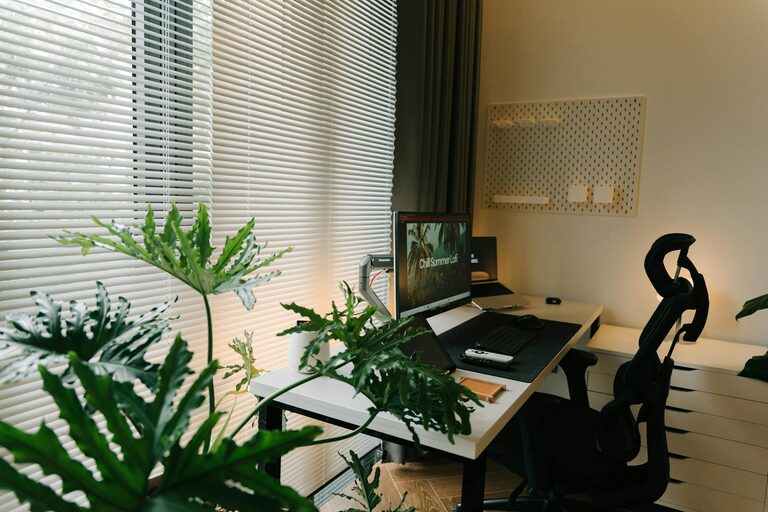
Natural light can improve mood and reduce eye strain. Position your desk near a window if possible, but avoid glare on your screen by using blinds or curtains. If natural light is limited, invest in good quality, adjustable artificial lighting.
Setting Up Your Workspace Essentials
Invest in a Comfortable Chair and Desk
Ergonomics play a key role in your productivity and health. Choose a chair that supports your lower back and allows your feet to rest flat on the floor. Your desk should be at a height where your arms can rest comfortably without strain.
Organise Your Equipment
Keep your computer, keyboard, and other accessories well organised. Use cable organisers to tidy wires, and store frequently used items within easy reach. Decluttering your desk can help maintain focus.
Creating a Calming Environment
Choose Soothing Colours
Colours affect mood. Soft, neutral tones such as beige, light blue, or green can create a peaceful setting. Avoid overly bright or distracting colours that may increase stress.
Add Personal Touches Mindfully
Photos, plants, or artwork can make your workspace inviting and less sterile. Indoor plants in particular improve air quality and add a natural element that can be calming. However, avoid overcrowding the space.
Control Noise Levels
If you are in a noisy environment, consider noise-cancelling headphones or background sounds such as white noise or soft music to help maintain concentration.
Tips for Staying Productive
Establish a Routine
Set regular working hours and breaks. A clear schedule aids focus and prevents burnout. Use alarms or timers to remind you to stand up and move around.
Use Organisational Tools
Digital or paper planners, to-do lists, and apps can help manage tasks and deadlines. Breaking work into smaller, manageable chunks often leads to better productivity.
Minimise Distractions
Turn off non-essential notifications on your devices, and communicate your working hours to others living with you to limit interruptions.
Prioritise Wellbeing
Take Regular Breaks
Short breaks every hour can prevent fatigue and eye strain. Use the time for stretches, walking, or simple relaxation exercises.
Practice Mindfulness and Relaxation
Consider starting or ending your day with brief mindfulness sessions, deep breathing, or meditation. These practices can enhance focus and reduce stress.
Conclusion
Creating an effective home workspace involves attention to comfort, organisation, and atmosphere. By carefully choosing your location, designing a calming environment, and adopting productive habits, you can enjoy a work area that supports both relaxation and efficiency. Remember that the best workspace is one tailored to your personal needs and preferences, so feel free to experiment and adapt as you go.